
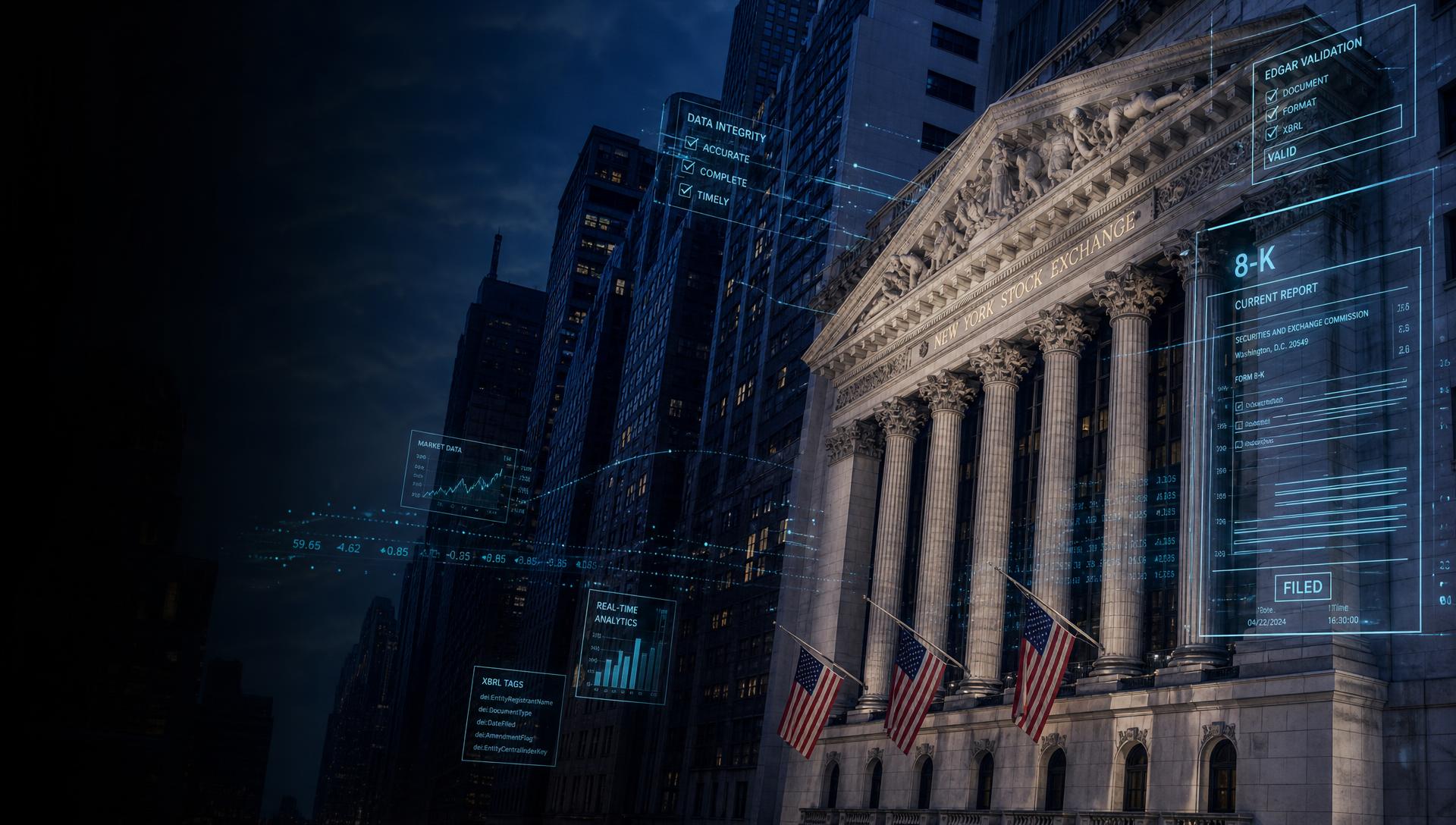
SEC reporting and capital markets automation
Why teams move off legacy reporting platforms
01Explore what your accounting and finance teams can do when the engine itself checks every figure.
Rule-based core engine
Reporting logic, controls and disclosure checks run inside the engine — not through an add-on layer stitched over linked documents.
Autonomous data ingestion
Ledgers, subsidiaries and source systems reconcile continuously, so numbers stay current between close cycles.
Built-in control assurance
Security and control validation is part of every workflow instead of a separate module bought alongside it.
Audit-ready by default
Evidence, lineage and approvals are produced automatically as work happens, not assembled before an audit.
What your teams can automate
02One engine across the reporting lifecycle — statutory, regulatory, management and board.
Legacy platforms vs an evidence-first engine
03Most incumbent reporting suites started as linked-document tools and have bolted on features ever since. Ours was built around evidence from day one.
Linked spreadsheets and documents with an assistant layered on top.
Core engine designed from the ground up, with documents as an output of the engine.
Periodic imports and manual refreshes between reporting cycles.
Continuous ingestion and reconciliation across entities and systems.
Separate compliance and control modules, licensed and configured apart.
Control validation embedded in every workflow, no separate module.
Collected manually ahead of each audit.
Generated automatically with full lineage as work happens.
Vendor template updates on a release schedule.
Engine-level rule updates applied to existing reports immediately.
How the engine works
04Four stages, running continuously rather than once per quarter.
Connect
Link ledgers, ERP, ESG and disclosure sources through governed connectors.
Understand
The engine maps accounts, entities and disclosure requirements into one model.
Produce
Statements, filings and board packs are drafted with validation applied inline.
Assure
Reviews, approvals and evidence are captured automatically for every output.
The SEC controls DECIMA runs
059 disclosure, filing and governance controls held continuously — not reconstructed the week a filing is due.
- Item 1.05Materiality determination on a declared cyber incident4 sourcesHuman call
- Item 1.05(a)Filing within four business days of the materiality call6 sourcesAutomated
- Item 1.05(c)Amended disclosure when the facts change3 sourcesMonitored
 06
Experience DECIMA in action
Drop in evidence, watch DECIMA evaluate every control automatically, and see how compliance decisions are sealed step by step.
Evidence ConsoleLive run
SEC / EDGAR
Material cybersecurity incidents and the disclosure controls behind an 8-K Item 1.05 filing.
- Documents
- 3
- Controls
- 4
- Frameworks
- 1
Your decision
SEC 8-K Item 1.05 — Incident materiality determination
Flagged for remediation. The control owner is notified and the gap stays visible in the pack.
- Evidence hash
- a41f9c07e2b5…d38e
- Sealed
- October 31, 2026
- Signed by
- Compliance owner
File to EDGAR
8-K Item 1.05The sealed pack becomes an 8-K Item 1.05 report and goes straight to the filer.
- Assemble8-K Item 1.05 narrative built from the sealed decisionsDone
- RenderPDF report generated — 4 pages, 186 KBDone
- ValidateEDGAR schema and Inline XBRL tagging checks passDone
- TransmitSubmission sent to the EDGAR filer gatewayDone
- AcceptedAccession number returned and stamped on the packDone
Run log
- 05:42:36 AMAssemble started8-K Item 1.05 narrative built from the sealed decisions
- 05:42:36 AMAssemble completed8-K Item 1.05 narrative built from the sealed decisions
- 05:42:36 AMRender completedPDF report generated — 4 pages, 186 KB
- 05:42:36 AMValidate completedEDGAR schema and Inline XBRL tagging checks pass
- 05:42:36 AMTransmit completedSubmission sent to the EDGAR filer gateway
- 05:42:36 AMAccepted completedAccession number returned and stamped on the pack
- Accession number
- 0001193125-26-208417
- Accepted
- October 31, 2026
Demo filing — nothing is transmitted to the SEC from this page.
This is exactly what the auditor receives — the same run, the same artefacts, the same decisions.
Securities & Exchange reporting questions, answered
07What finance and reporting teams ask before automating disclosure.
Thousands of teams still report the legacy way
Bring us one reporting cycle and we will show you what an evidence-first engine removes from it.
Book a working session